Heritage · Boundary Country · November 14, 2026
Greenwood's Lost Gold: The 1896 Camp McKinney Robbery
Three gold bricks left the Cariboo mill at Camp McKinney in a buggy in August 1896 and were taken on the road toward Midway. The newspapers of that year tell a clear story. The legend that grew later is a different one.
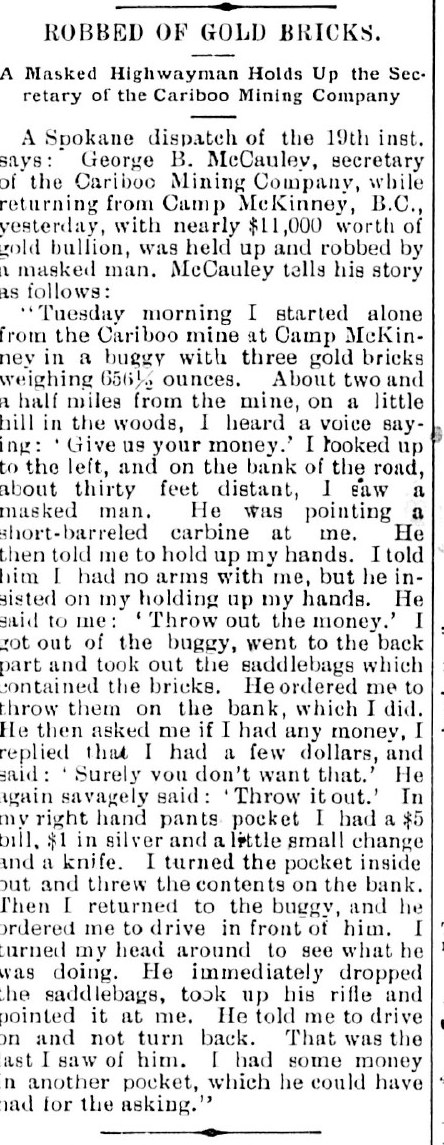
On a Tuesday morning in August 1896, George B. McAulay left the Cariboo mine at Camp McKinney alone in a buggy, carrying three gold bricks that weighed 656½ ounces — nearly $11,000 then. About two and a half miles out, on a wooded hill, a masked man with a short-barreled carbine ordered him to throw down the saddlebag and drive on. That much comes from McAulay’s own account, printed in the Victoria Daily Colonist on 21 August 1896. (The newspapers of that year also spelled his name McCauley and McAuley.)
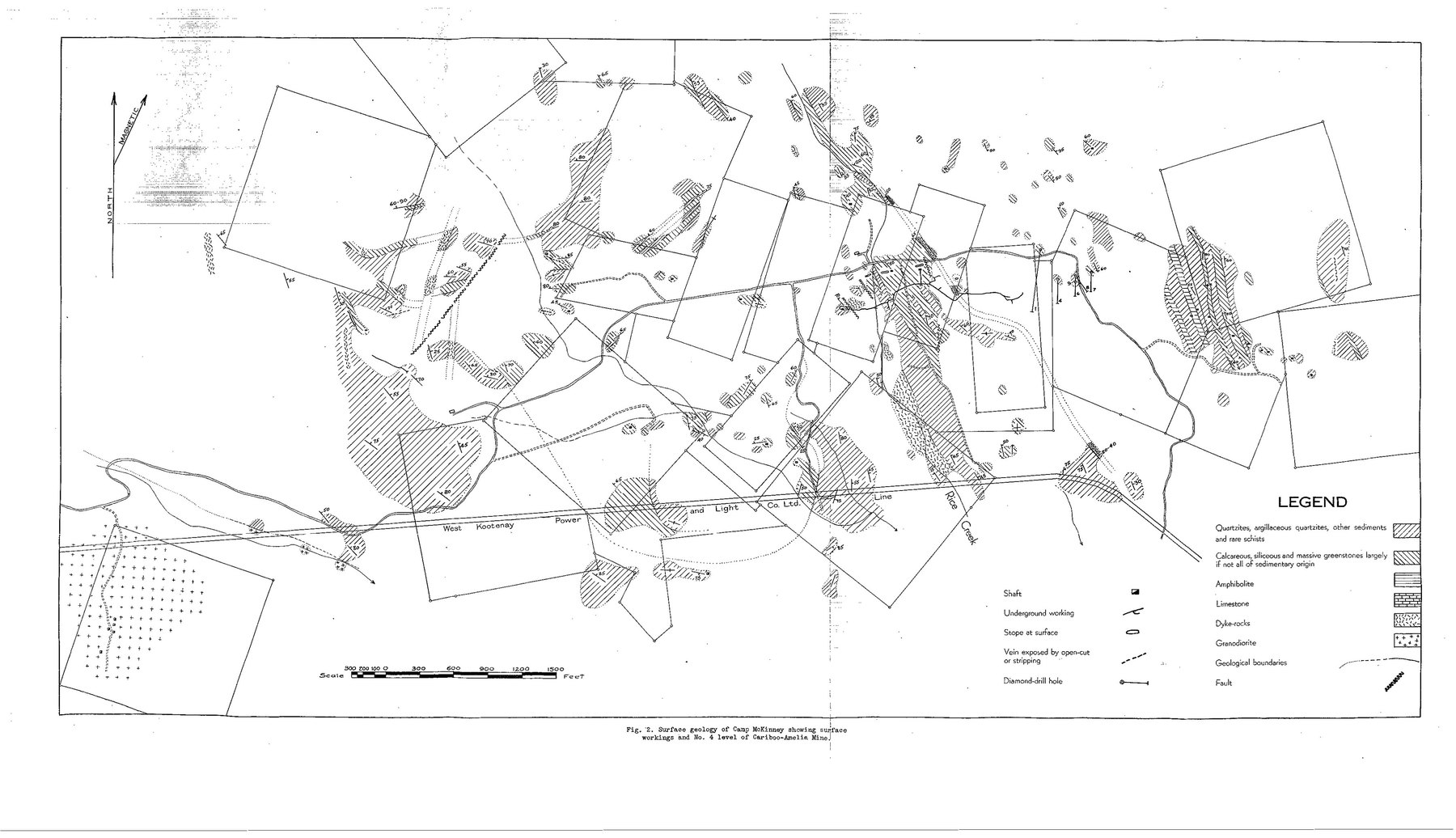
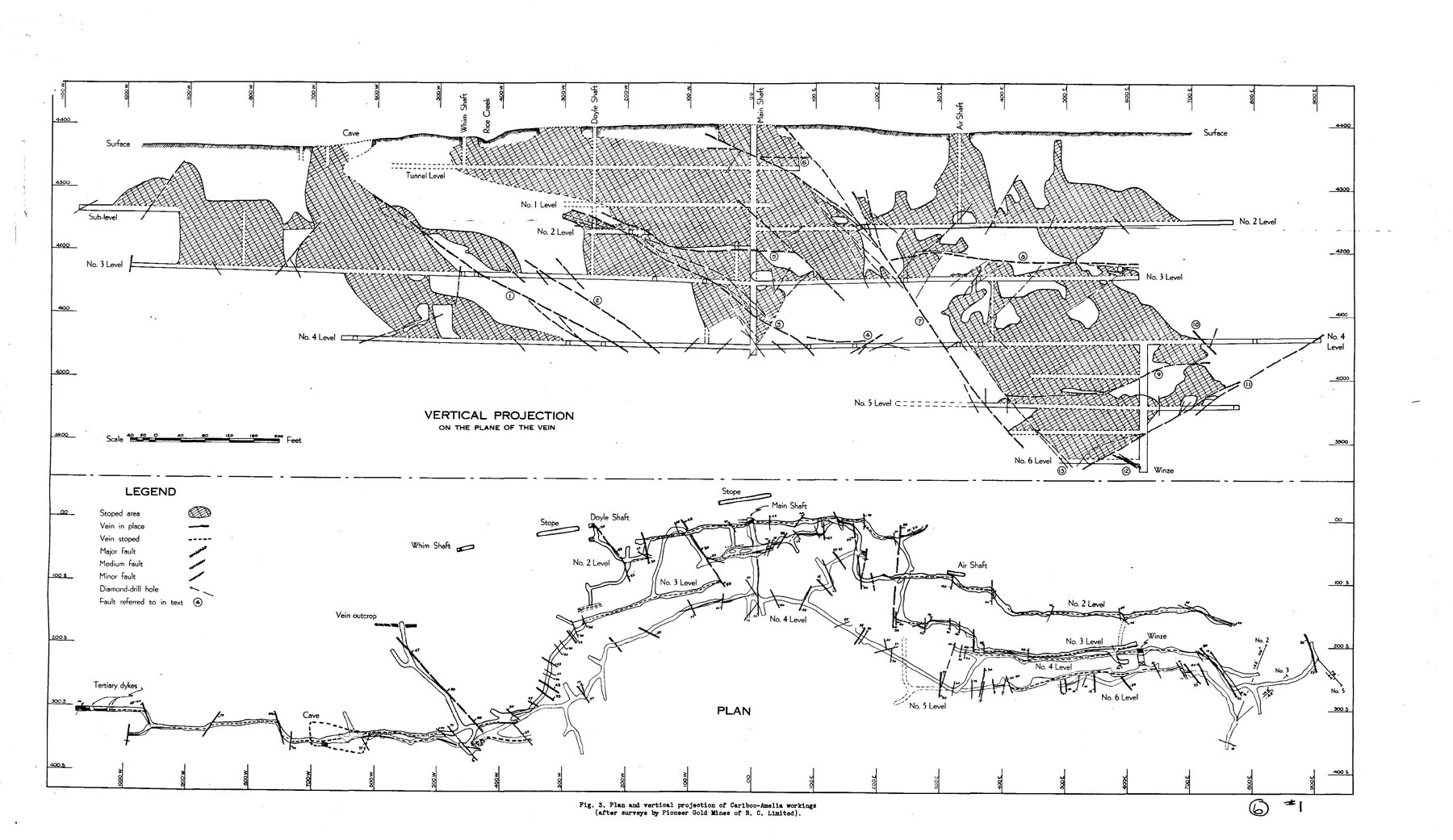
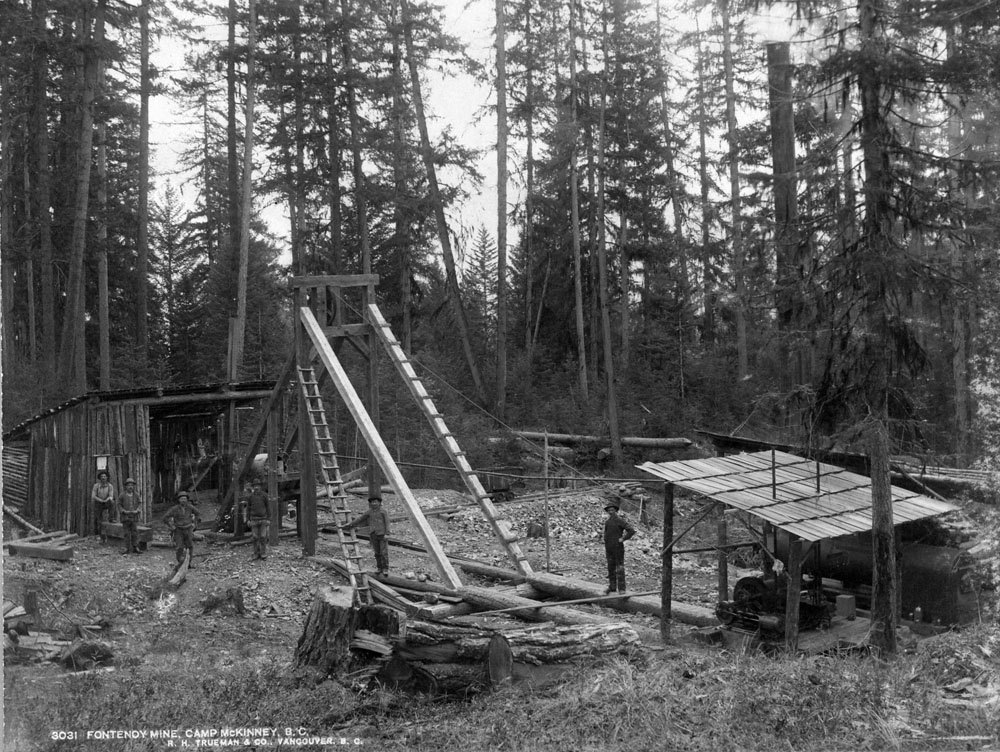
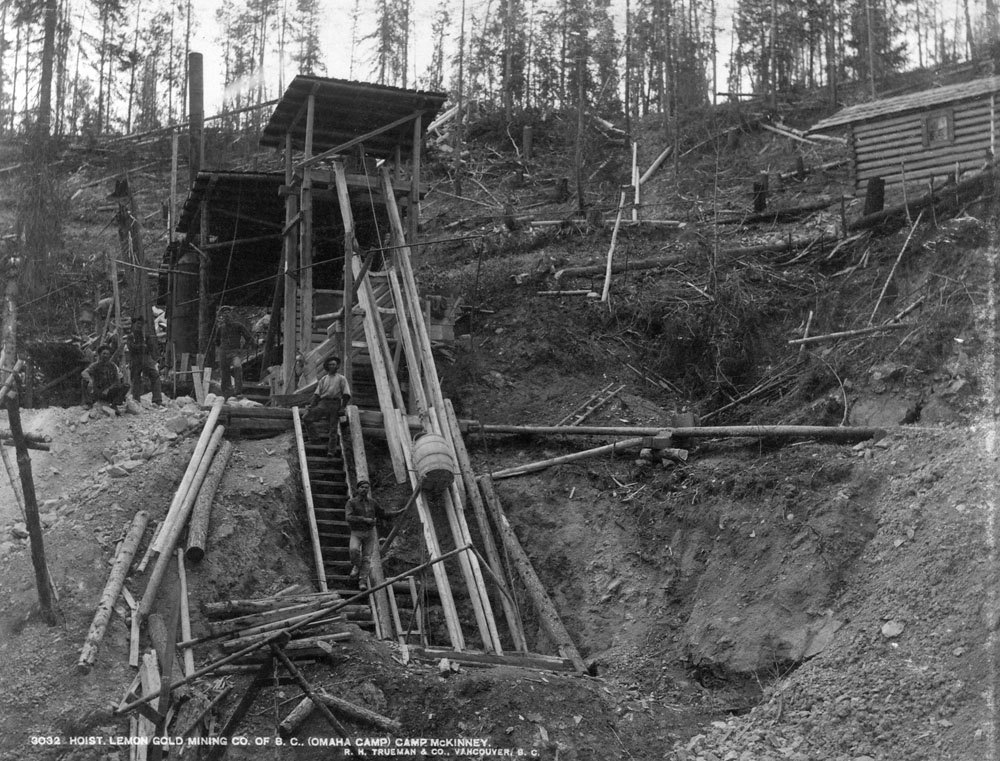
Camp McKinney, in the Greenwood Mining Division on the slopes of Mount Baldy, was then the Boundary’s leading gold camp. The Minister of Mines reported that the Cariboo and Amelia mill ran all year and produced 6,743 ounces of gold, valued at $116,243. Greenwood, barely a year old, lay a short journey east. Midway was the shipping point.
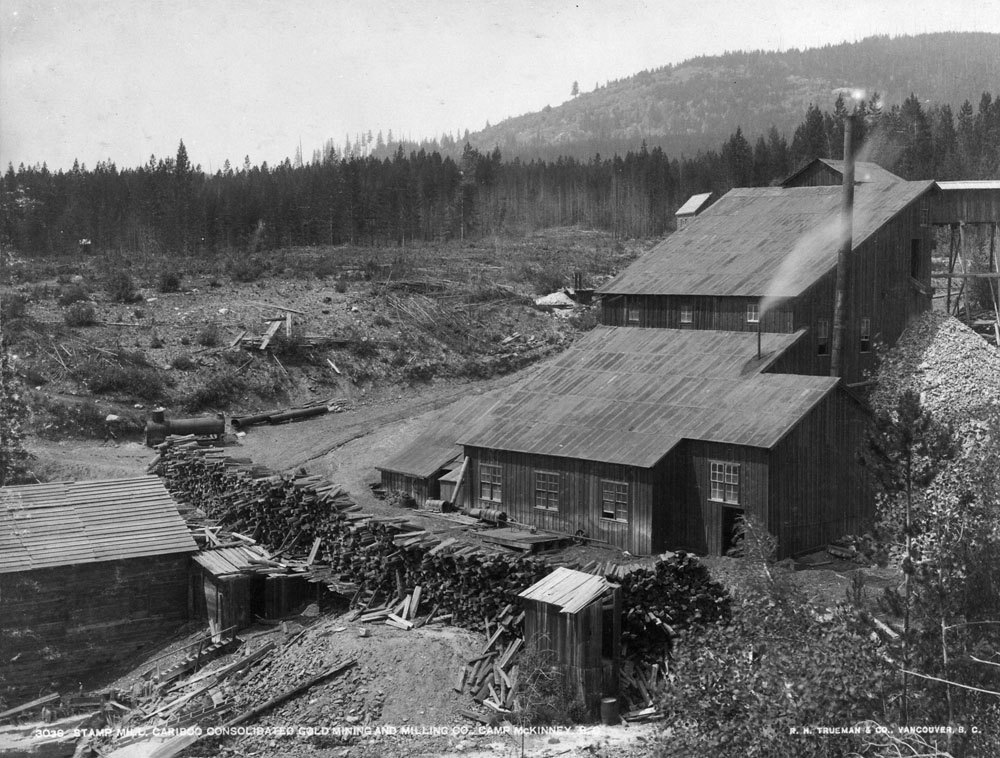
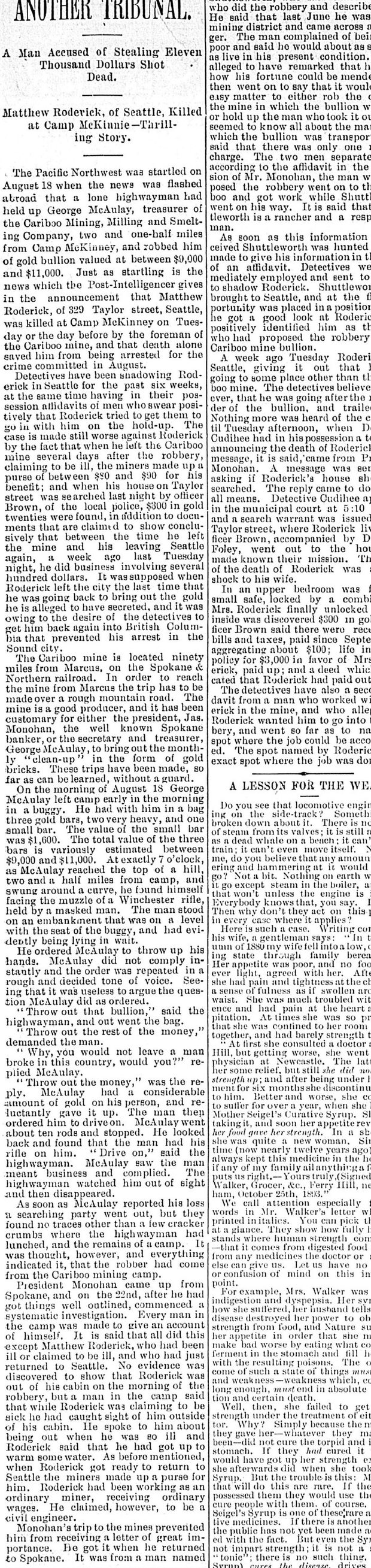
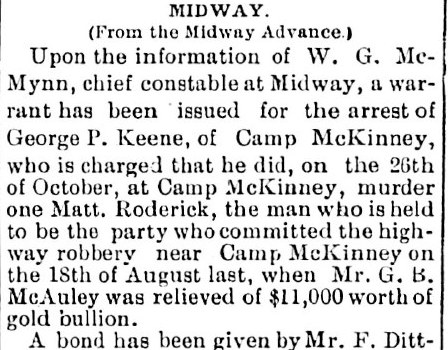
Detectives later closed in on Matthew Roderick of Seattle. On 30 October the Colonist reported that Roderick had been killed at Camp McKinney by the foreman of the Cariboo mine, and that he was thought to have come back for the rest of the bullion. A Midway Advance item reprinted on 9 December said a warrant had been issued, on the information of Chief Constable W. G. McMynn of Midway, for George P. Keene of Camp McKinney, charged with murdering Matt. Roderick on 26 October. The 1896 papers did not report the gold being found on the body.
What grew later is easier to tell around a stove than to prove from those papers: a greeting in the dark, a rag stuffed in a gun muzzle, a hidden canvas vest, and the claim that the bars still lie in the hills above Rock Creek. Later writers also used a different spelling of the foreman’s name. We have not found a period portrait of the men, or an original 1896 wanted poster or reward advertisement.
Do you have a family story, a clipping, or a photograph from Camp McKinney? We would be glad to hear it at editor@ledgemediagroup.com.
— Die Redaktion / The Editors
Sources: Victoria Daily Colonist, 21 August, 30 October and 9 December 1896, via the University of Victoria / Internet Archive; Annual Report of the Minister of Mines for 1896, p. 576; M. S. Hedley, Geology of Camp McKinney and the Cariboo-Amelia Mine, B.C. Department of Mines Bulletin 6 (1940). Later popular accounts are treated here as legend, not as 1896 documentation.